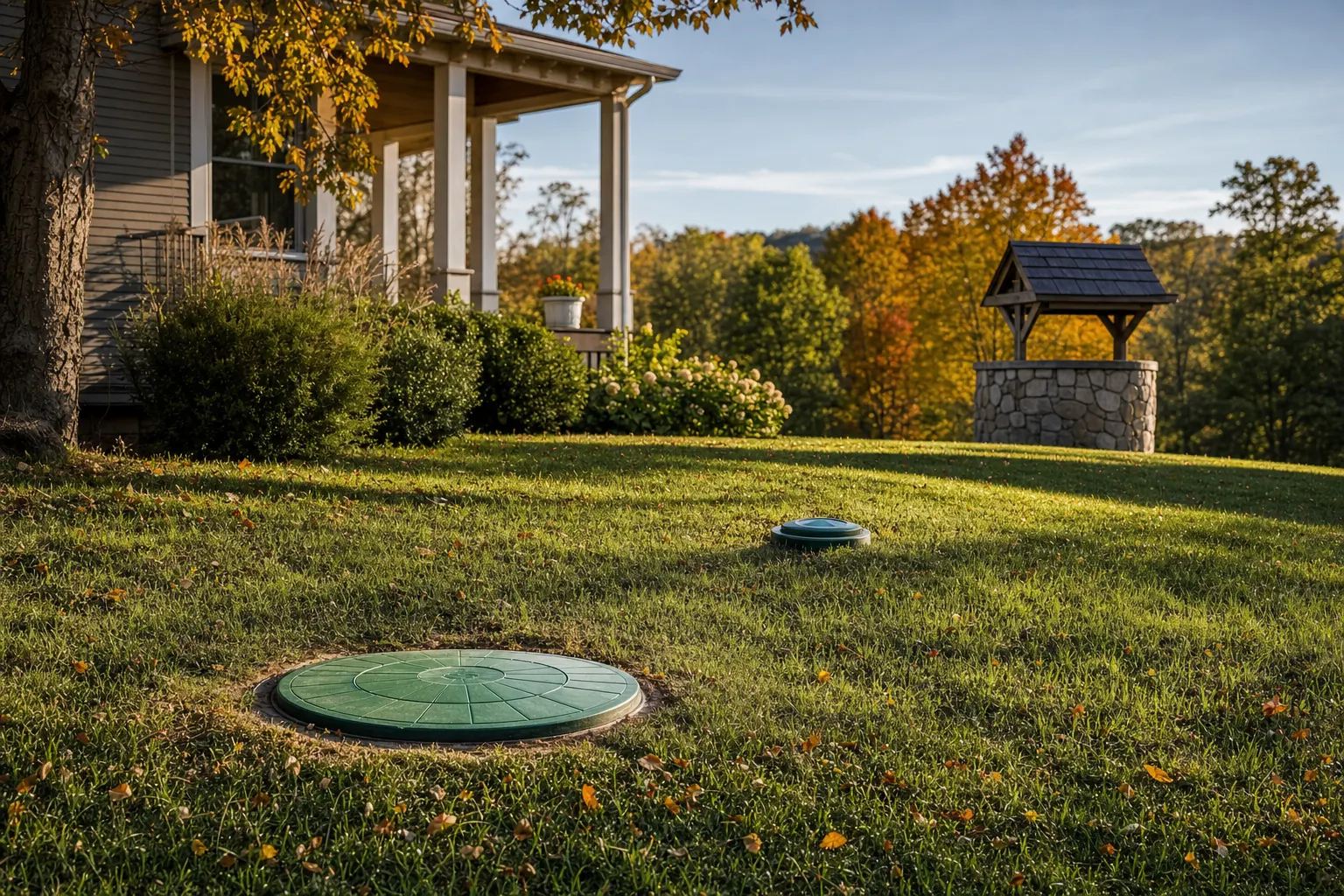

Every fall, rural homeowners relying on private wells and septic systems should take stock of their setup—what kind of system they have, where it’s located, its recent history, and how to plan for another safe, trouble-free year. The essentials: confirm your system’s type and layout, keep thorough records, recognize warning signs, and always engage qualified professionals. Below, we’ll break down what to know and what to ask as you prepare for seasonal septic and well maintenance.
How to Confirm If You Have a Septic System and Where It’s Located
If you’re new to rural property, the first step is confirming whether your home is served by a septic system and, if so, locating its key components. Official property documents—such as deeds, building permits, and design plans—often note the presence and location of a septic system. Many rural properties lack city sewer service and instead have their own wastewater treatment onsite. Visual clues may also help: a slight mound or hill in the yard can signal a drainfield for some system types. For the tank itself, look for an access riser—a black or green disc about 10 feet from the house, often near where the home’s main plumbing exits the building. Absence of a sewer or wastewater charge on your utility bill, or no utility bill for this purpose at all, is another indicator that you manage your own system. Similarly, if your incoming water line has no meter, this likely means you are using a private well rather than public water.[1]
Understanding the Connection Between Well and Septic Systems
Most rural homeowners with private wells also have onsite septic systems, since municipal infrastructure typically ends before reaching these areas. Knowing this, it’s advisable to plan for maintenance of both systems as part of your fall routine. Since these systems are unique to your property and often buried, understanding their locations and relationship is key—not only for proper upkeep but also to avoid unintentional damage from landscaping or home improvements.[1]
The Importance of Professional Inspections: Why Fall is a Smart Time
Professional well and septic inspections are recognized as a vital step before buying a rural home, but they’re equally important for ongoing property care—especially each fall, as you prepare for winter. Industry guidance, particularly in home-buying contexts, frames inspections as essential for revealing hidden risks, system age, and pending maintenance issues. Fall is a natural time for this review before freezing weather makes soil access and repairs harder, or as a regular check-in to ensure optimal system health and catch any problems before they escalate.[2][3][5]
What Maintenance Records to Keep for Well and Septic
While none of the reviewed sources provide a detailed breakdown of record-keeping best practices, general homeownership standards suggest keeping:
- Property records showing system installation and permitted design
- Dates and details of all septic tank pump-outs
- Inspection reports (both well and septic)
- Water test results for private wells
- Invoices for repairs, upgrades, or maintenance
These records are critical for ongoing safety (especially well water quality), diagnosing future issues, proving proper care if you sell the property, and complying with any local requirements. They will also help service professionals evaluate your system’s health at each maintenance visit.
Recognizing Warning Signs: When Your Septic May Be in Trouble
The specific symptoms of septic failure are not detailed in the cited sources, but common-sense red flags include persistent sewage odors, unexplained wet spots or lush grass above the drainfield, slow drains, or gurgling sounds in plumbing. Changes before winter—like saturated ground from fall storms or sudden backups—warrant an urgent professional check. Routine visual checks and monitoring for system changes are important as cold weather approaches, even if no warning signs are present.
Questions to Ask Service Professionals—Before, During, and After Inspection
Being proactive and well-informed when hiring a septic or well service provider is recognized as a best practice. At a minimum, prepare to ask:
- Are you licensed and familiar with local requirements?
- What does your inspection or maintenance visit cover?
- Are there any current issues or signs of wear requiring urgent attention?
- What maintenance schedule do you recommend for my system type?
- Can you review or update my maintenance records?
- What should I watch for this winter, and when should I call for help?
Each of these aligns with good practice, reflecting the widespread advice that homeowners should engage service professionals with clear questions for safe, effective results.[4]
Where to Find Qualified Septic and Well Professionals
If you don’t already have a trusted provider, several resources are available. Local health or environmental departments can sometimes supply historical records and often maintain lists of qualified, licensed professionals. A national tool—the National Onsite Wastewater Recycling Association (NOWRA) Septic Locator—publicly lists member septic providers, and is a useful starting point.[1] Keep in mind, though, that this database is not exhaustive; personal recommendations and checking with local agencies remain important.
Blazing Hog’s Role: Staying Connected for Rural Homeowners
If you live in a rural area, you know that reliable internet makes it far easier to manage seasonal home maintenance—whether researching licensed septic professionals in your area, scheduling inspections online, or securely archiving digital maintenance records. Blazing Hog’s Air Fiber service was designed for exactly these scenarios: rural homes, farms, and cabins that city providers too often overlook. With coverage in communities across the country and a focus on customer support rooted in real rural experience, Blazing Hog helps homeowners handle critical seasonal tasks—like fall septic and well planning—without the headaches of unreliable connectivity. A solid rural internet connection doesn’t just keep you online; it keeps your home, your family, and your essential services running smoothly, all season long.
How these sources were selected
The research reviewed recent, U.S.-focused government and industry sources, prioritizing guidance that addressed septic system basics, system identification, working with professionals, and practical maintenance checklists. The selection included federal EPA advice, service provider inspection articles, and real estate checklists, and was chosen for their focus on well and septic concerns crucial to rural homeowners. Source access was prioritized by recency and clarity, with government and established informational sites weighted most heavily.
Before you begin any work on your well or septic system, check with your local and state authorities about permit and inspection requirements, as regulations differ by area. Service is not intended for medical monitoring, unmanned vehicle control, or life-safety uses.
Rules vary by location: check with your state and local authorities about the permits and regulations required for this work before you start.