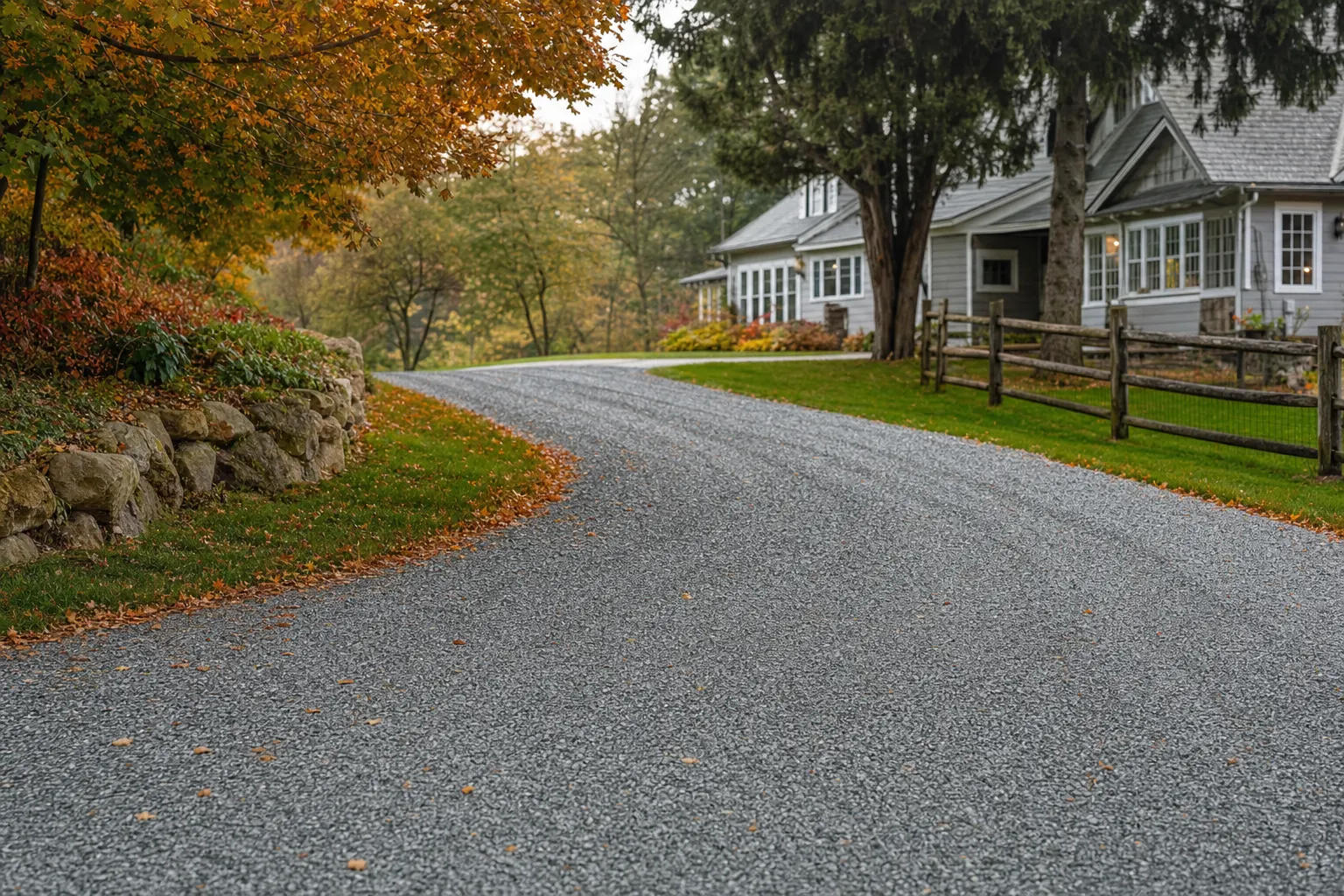
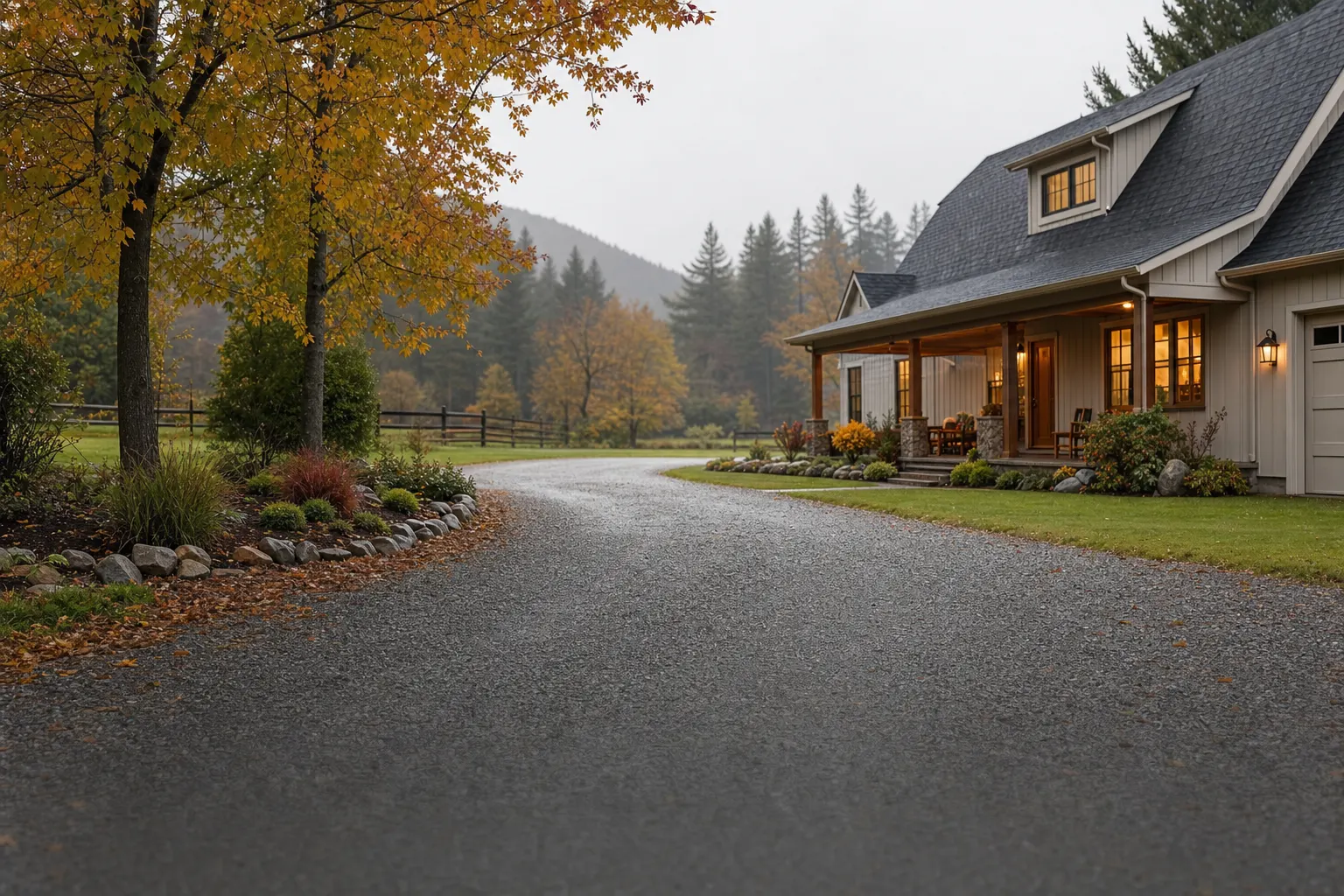
If you want your gravel driveway to hold up through fall downpours and winter freeze--not rattle your teeth with new potholes--the best time to act is now. Neglecting ruts, thin gravel, or drainage problems can lead to bigger washouts and costly repairs after that first bad storm. The reviewed evidence suggests that careful inspection for common damage, basic surface fixes, and smart timing will get most driveways through the season. But if your driveway is long, steep, badly eroded, or showing signs of severe water damage, professional grading and drainage work are often the right call.
What Seasonal Damage Appears in Gravel Driveways?
Gravel driveways are vulnerable to several types of damage in the transition from summer to winter:
- Potholes and ruts: Heavy summer use and early fall rainfall often expose or worsen weak spots.
- Washouts/gullies: Intense rain can carve channels through gravel and strip away surface material, especially on slopes[1][3].
- Thin spots and uneven surfaces: Areas with worn-down gravel are more prone to water pooling and erosion[4].
- Drainage issues: Poor slope or missing ditches lead to standing water or water running down the drive, which accelerates all other problems.
Leaving these issues unaddressed before fall means they’ll likely worsen with each rain, buried leaves, and the repeated heaving and thawing of winter[4].
How to Inspect and Assess Your Driveway Before Fall
A thorough fall driveway check involves both looking for damage and thinking ahead about how rain and runoff will behave:
- Walk the entire surface: Mark out any potholes, ruts, gullies, or low spots where water might collect.
- Look for thin gravel: Areas where you can see dirt or subgrade peeking through are more likely to develop ruts and potholes.
- Check for existing drainage structures: Are there ditches, water bars, or a noticeable crown (center higher than edges) to shed water?
- Observe water flow during or after rain (when safe): The reviewed sources emphasize that actually watching a storm, even from inside, can reveal hidden drainage problems and new washout paths you won’t spot in dry weather.[1]
DIY Maintenance: What Can Homeowners Safely Do?
For typical potholes, ruts, and thin gravel, DIY fixes are both reasonable and cost-effective:
- Re-graveling: Adding material while the ground is still dry and before winter sets in creates a more stable base[4].
- Filling potholes and ruts: Use well-graded gravel (not just loose stone)--a blend of coarse gravel and fine material (such as limestone dust) packs in tightly, resists erosion, and is less likely to wash out in the next storm[1].
- Correcting grading: Small-scale grading to restore a slight crown, so water moves toward the edges, can often be done with a landscape rake or small tractor.
- Addressing drainage: If you spot water crossing or flowing down your driveway, minor ditching along the sides, or installing water bars (diverting logs or shallow mounds), can redirect flow and reduce future rutting[3].
It’s generally best to complete major gravel or surface work in late summer or early fall. Dryer, warmer weather helps fresh gravel settle and compact, and surface fixes are more likely to last through the wet season. Waiting until late fall or after major rains can result in muddy conditions and new gravel sliding or sinking instead of staying in place[4].
How Fall Rains and Winter Freeze–Thaw Cycles Worsen Existing Problems
If potholes, thin spots, or bad drainage are overlooked in late summer, the onset of wet fall and winter will amplify each problem:
- Surface defects deepen: Thin areas turn into deep ruts and potholes after repeated rains and vehicle traffic.[4]
- Washout risk rises: Heavy or prolonged rain can strip entire sections of gravel off long or steep drives, even if they seemed well graded at first[1].
- Freeze–thaw action: Water trapped in low spots expands as it freezes, forcing gravel apart, creating larger holes.
As one contractor points out, erosion and surface instability tend to escalate under fall leaves, rain, and winter cycles if regular summer maintenance is skipped[4].
Why Drainage Design and Water Flow Matter Most
Across the reviewed sources, effective drainage emerges as the single most crucial factor for gravel driveway longevity[1][3]. If runoff is left to flow down the center or along wheel ruts, even thick, fresh gravel will be washed away in a big storm. Conversely, a drive with good grading (crown or cross-slope), clear ditches, and/or water bars often sheds water safely off to the sides.
Watching water during rain can show where it leaves the drive, where it pools, and if new gullies form[1]. Even a driveway that looks fine on a sunny day may reveal major issues during a cloudburst. The best DIY fix is to create shallow channels or swales along the sides and keep the center slightly higher.
When Does a Project Need Professional Attention?
Certain driveway conditions indicate basic patching won’t be enough, and a contractor’s services are likely essential:
- Steep slopes: If your drive is long, hilly, or the site is prone to rapid runoff, you could lose most of your gravel in a single intense storm. Real-world examples show that even freshly graded driveways can be devastated by severe weather if drainage isn’t robust[1].
- Major washouts/ruts/gullies: Large channels or widespread surface loss after rain are signs that heavier equipment and professional grading may be needed to restore the base and reshape for proper drainage.[3]
- Recurring drainage problems: If ditches, water bars, or crowns repeatedly fail, or water undercuts the surface, consider a detailed review by a driveway contractor to recommend culverts or regrading.
- Extensive re-graveling needed with drainage fix: If the whole drive is down to the subgrade or uneven, and you’re unsure how to add material and rebuild proper slope, professionals bring the equipment and know-how to do it right before the next big storm.[3]
The Case for Timely Fall and Winter Maintenance
While major re-graveling is best done in late summer or early fall when conditions are dry and stable, seasonal care continues into November. News features specifically recognize this as an ideal time to review and fine-tune your driveway, addressing any last-minute touch-ups and ensuring winter readiness, especially before holiday traffic and the harshest weather arrive[2].
How Blazing Hog’s Rural Experience Informs Home Resilience
At Blazing Hog, we know that a rugged gravel driveway isn’t just an access point--it’s part of the rural foundation your home, your work, and even your connectivity relies on. When Blazing Hog set out to bridge rural gaps, we brought that same attention to practical, local challenges--treating every household’s approach, road, and network as a system to be checked, prepped, and backed with real, person-to-person support. In tough weather, a stable drive and a connection that keeps your family together both matter. That’s why, just like our advice on prepping your internet for storm season, our technicians are trained to think holistically about the home, land, and life you’re building beyond city limits.
How these sources were selected
Research for this article focused on publicly available, driveway-specific resources dealing with fall/winter timing, potholes, washout, ruts, and drainage. Of many reviewed, only four sources directly addressed these issues: an experiential forum on steep gravel driveways[1], a contractor checklist emphasizing drainage and washout remedy[3], a news piece on seasonal driveway care (even if details were sparse)[2], and a contractor’s perspective on fall re-graveling timing[4]. The recommendations here interpret the combined practical advice for homeowners in temperate climates, not state-specific standards or rules.
Before starting significant repairs, check with your local authorities about permits or guidelines for driveway work in your area.
Rules vary by location: check with your state and local authorities about the permits and regulations required for this work before you start.