
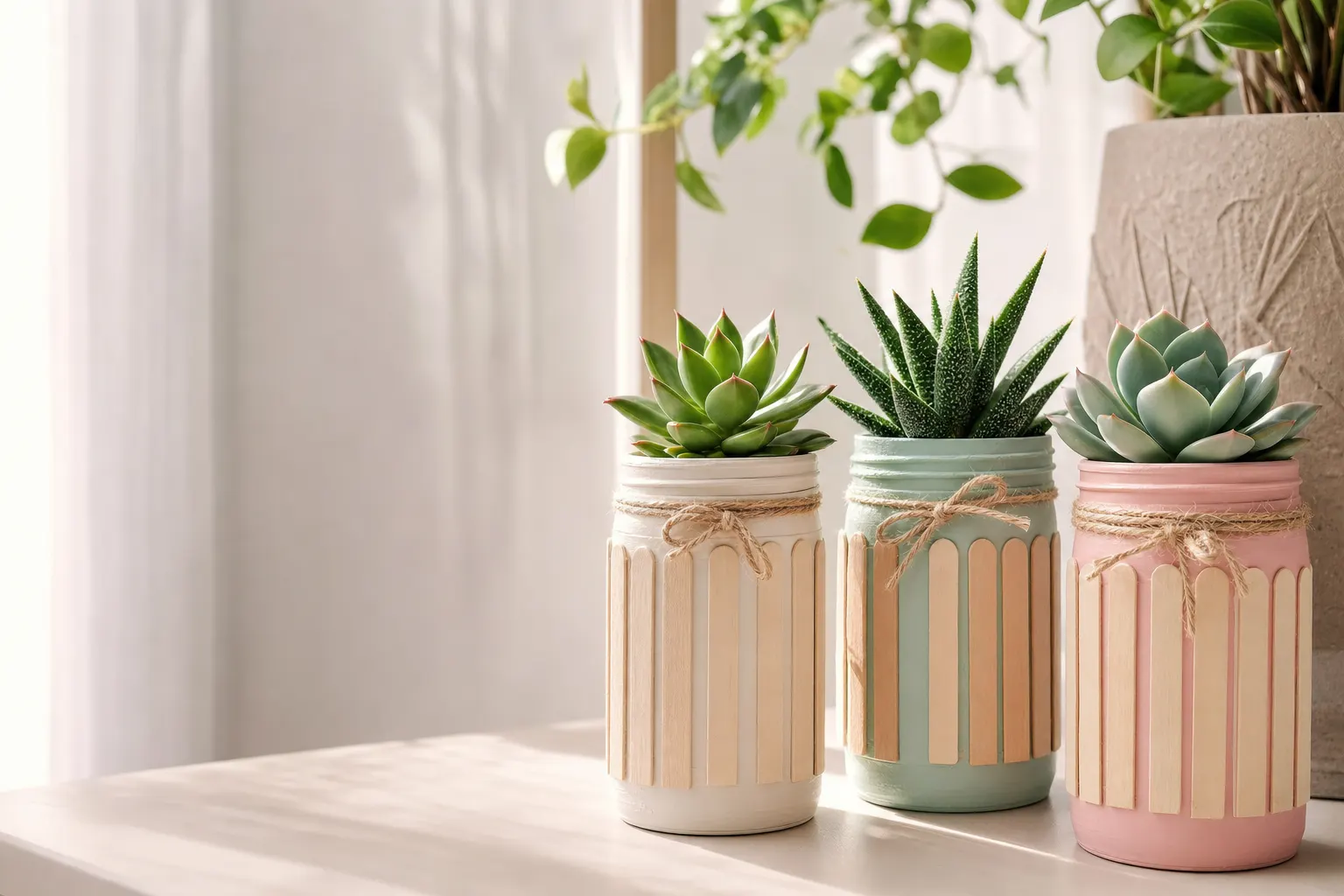
If you want a creative and cost-effective way to display small plants, you can upcycle old paint jars and wooden sticks to make an adorable mini planter. This project is straightforward, environmentally friendly, and doesn't require specialized skills or expensive materials.
Why Consider Upcycling for Your Home or Workspace?
Repurposing items like paint jars and craft sticks reduces waste and turns something destined for the trash into something uniquely yours. Mini planters are not just decorative—they’re useful for propagating succulents, starting herb seeds, or adding life to window ledges. With upcycling, you save money, contribute less to landfill, and personalize your décor in a way that store-bought items can’t match.
Materials You’ll Need
- Used paint jars (cleaned and dry; glass or plastic both work)
- Wooden sticks (popsicle sticks, craft sticks, or leftover stirrers)
- Hot glue gun or craft glue
- Potting soil
- A small plant, sprout, or herb seedling
- Optional: Paint, markers, or washi tape for decorating
Preparing the Paint Jars
Before you begin assembly, thoroughly wash out any paint residue from your jars. Allow them to dry completely. Remove labels or sticky residue for a clean finish. If you’d like, you can lightly sand plastic jars for better glue adherence—or keep the weathered look for added charm.
Assembling the Wooden Walls
- Measure & Cut (if needed): Measure the height of your cleaned paint jar. If your wooden sticks are longer than the jar, you may trim them to match the height for a tidy look, or leave them slightly taller for a picket-fence effect.
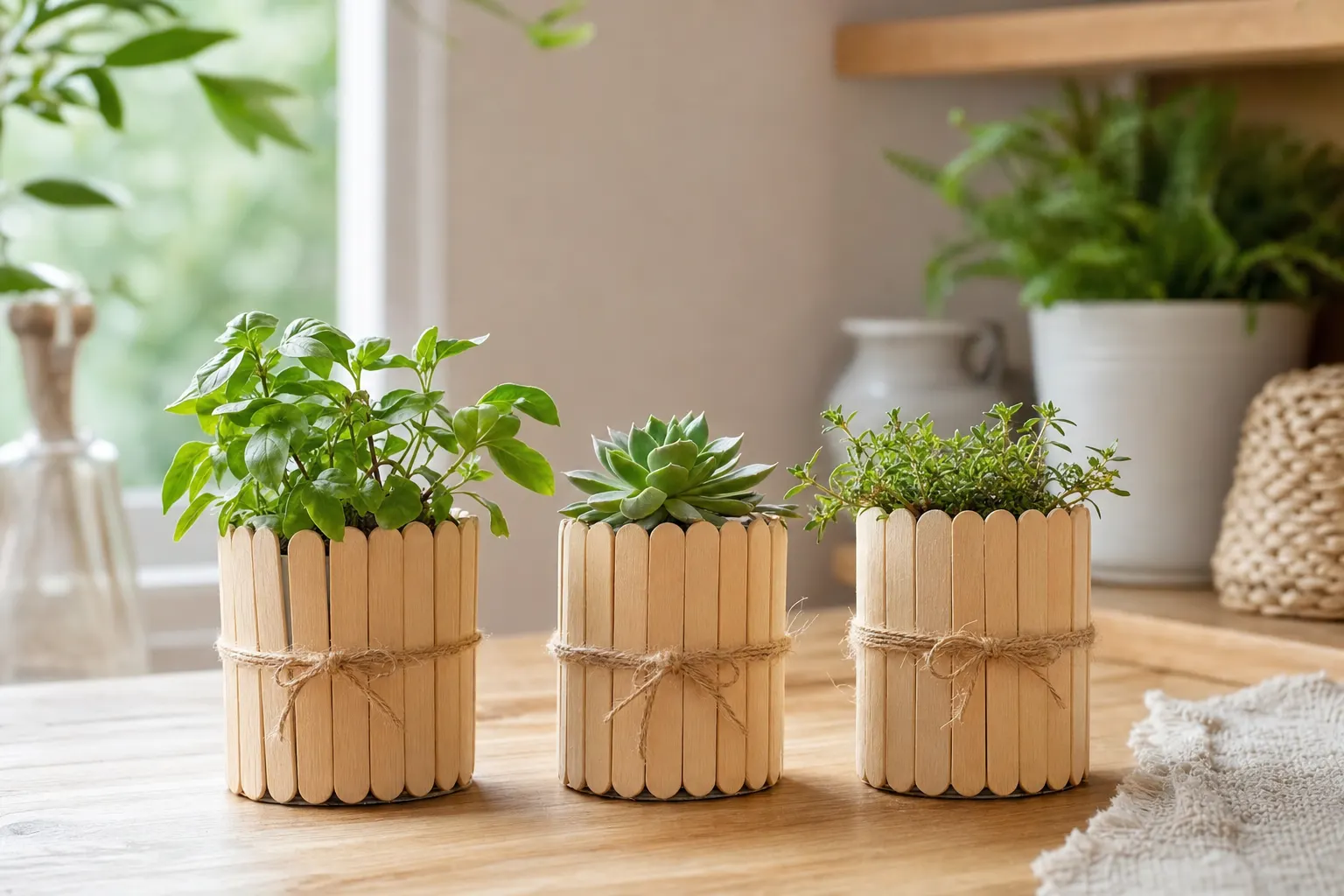
- Glue the Sticks: Apply a line of glue vertically on each stick and attach to the jar’s outer surface, one by one, until the jar is completely covered. For the most even appearance, start at what will be the back of the planter and work your way around.
- Let Dry: Allow the glue to cure fully before moving the jar.
Decorating Your Planter
Once the wooden sticks are secure, you may paint, stain, or decorate your planter. Consider:
- Painting in stripes or patterns
- Adding initials, shapes, or small sticker decals
- Wrapping twine or ribbon for a rustic touch
These touches add personality, making every planter unique.
Potting Your Plant
Add potting soil to your finished jar, leaving some headspace. Insert your chosen plant or seedling. If using a glass jar without drainage holes, water very sparingly and add a layer of gravel before the soil to mitigate the risk of root rot. Place your new planter in a sunny spot, and enjoy your handiwork!
Safety and Environmental Considerations
- Always clean jars thoroughly to eliminate any residual chemicals from paint or other contents—especially if you plan to use your planter for edible herbs.
- Be careful with hot glue guns; supervise children closely, or use craft glue for safer handling.
- Repurpose only jars and sticks not coated with toxic finishes. When in doubt, choose containers previously used with water-based paints.
- To further limit waste, consider biodegradable planting sticks and look for sustainable potting soils or repurposed materials for future projects.
Where to Find Inspiration and Share Your Projects
Social media, video tutorials, and craft forums are full of ideas for customizing your design further—adding drainage, using vertical racks, or even integrating small LED lights.
How a Reliable Internet Connection Supports Your DIY Journey
For many rural or remote households, sourcing creative upcycling ideas and sharing projects online depends on having dependable internet access. Reliable connectivity makes it possible to watch step-by-step videos, upload photos to friends or gardening groups, or video chat about creative obstacles without interruptions. If you’re looking for a rural-focused provider, Blazing Hog offers Air Fiber internet plans with speeds up to 500 Mbps (actual speed may vary by location; prospective customers can verify suitability with a 30-day free trial). All plans include data that may be reviewed or canceled for misuse or exceeding 2TB/month, so customers should check usage if planning high-volume uploads or streaming.
Before starting any project involving cutting, gluing, or reused containers, especially for edible plants, always check for safety best practices. For internet services or electrical work supporting DIY efforts, consult with local experts, and check with your state and local authorities about permit or compliance requirements.
Rules vary by location: check with your state and local authorities about the permits and regulations required for this work before you start.
Source: Save Old Paint Jars And Wooden Sticks To Make An Adorable Mini Planter (Hunker: Inspired Home Design, Gardening Tips, and DIY Improvements, November 9, 2026)