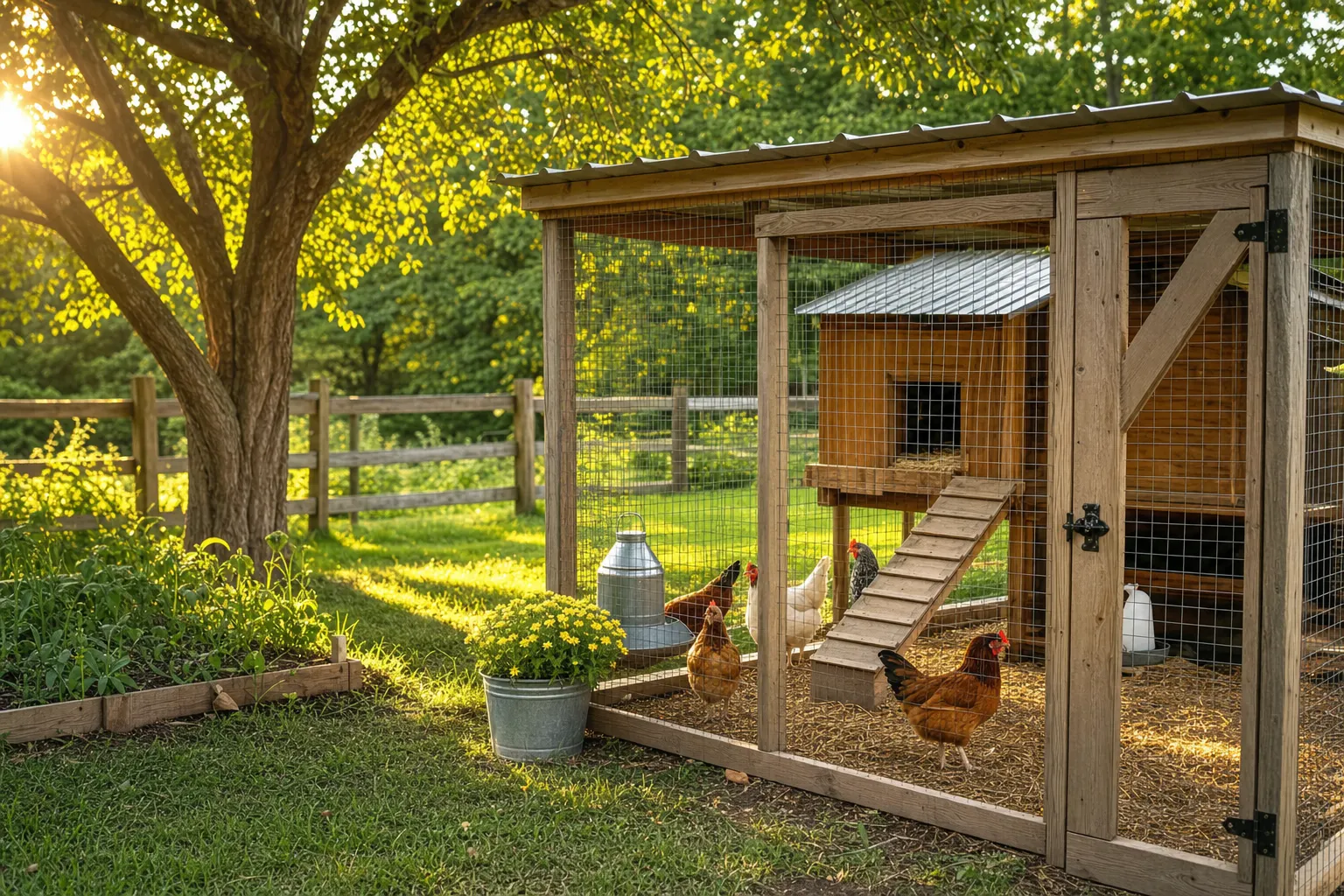
If you live in the country, building a hobby chicken pen can be an enjoyable, rewarding way to supply your family’s table and teach responsibility. Success depends on a few basics: practical pen design, flock safety, and an honest assessment of what rural life brings. Here’s what matters most.
Choosing the Right Site
For rural properties, the best pen location is dry, level, and close to home. This makes daily chores easier and deters predators. Avoid low spots that hold water and muddy conditions; dampness is tough on chickens’ health and cleaning is harder. Partial shade helps keep your flock cool in summer but aim for enough sunlight to dry the ground and deter mold.
- Keep the pen near your main living area if you want convenience for egg collecting and quick checks.
- Consider wind direction—pens shielded from prevailing winter winds offer a more comfortable environment for both hens and keepers.
Coop and Pen Size
Chickens need enough space to avoid stress and tailor flock size to what your family actually wants. For backyard flocks:
- Make sure your coop and run have enough room for each bird to remain healthy and content. The size needed depends on flock size and your available space.
- Too many chickens in a small space cause pecking and health problems; too few, and you may not meet your goals for eggs or meat.
Planning for Expansion
Rural families sometimes start small and add more birds later. Building a slightly larger run from the start can make future additions easier. Be honest about how much time you’ll realistically spend on chores—more chickens bring more work, not just more eggs.
Predator Protection
Country living means predators: foxes, raccoons, stray dogs, snakes, hawks, and sometimes larger threats. Design your pen with these in mind.
- Bury the fence wire 12 inches underground and bend it outward to stop animals digging under.
- Use half-inch hardware cloth (not standard chicken wire) for both the walls and the pen floor if you have persistent burrowers.
- A covered run prevents hawks and owls from swooping in; even simple netting is better than nothing.
- Latch all coop and run doors securely—raccoons are surprisingly skilled with simple latches.
Coop Construction Basics
Your coop must keep birds dry, provide good ventilation, and allow easy cleaning. Look for these features:
- Solid, waterproof roofing and walls.
- Good cross-ventilation—windows with hardware cloth let fresh air flow but keep predators out.
- Nesting boxes: 1 for every 3–4 hens is sufficient. Place them lower than the perches so hens sleep where you want them.
- Roost bars for sleeping should be higher than the nesting boxes and allow at least 8 inches of space per bird.
- Removable trays or wide doors can make manure cleaning much less miserable.
Food, Water, and General Care
- Clean water every day, and in winter, swap to heated waterers if temperatures drop below freezing.
- Chickens thrive on layer feed, but scratch grains, fresh vegetables, and kitchen scraps are popular treats. Avoid salty or spoiled foods.
- Secure feed storage is a must—mice and rats will make themselves at home if you leave bags open.
Rural Considerations: Distance and Self-Reliance
If you’re miles from stores, stock up on feed, bedding, and other supplies in advance, especially ahead of winter. Rural supply stores often carry everything you need for basic flock care. It pays to keep extra feed on hand in case of storms or muddy roads.
- Collect eggs daily—country predators will smell and steal them if you don’t.
- Clean the pen thoroughly at least once a month, more often in wet seasons.
Flock Management and Health
Healthy chickens are alert, active, and have glossy feathers.
- Watch for signs of illness: drooping wings, sleeping during the day, or poor feather quality warrant attention.
- Quarantine new birds for at least two weeks away from your flock before introducing them. Rural flocks can be more isolated, but neighboring properties may house wild birds or other poultry.
- Prevent mites and lice by providing a dust bath area—just a low box of sand and dirt will do for most birds.
Kids and Family Involvement
Chicken keeping is a hands-on, practical way to teach kids about animals, chores, and rural life. Assign age-appropriate tasks:
- Daily egg collection for young kids builds consistency.
- Older children may handle water, feed, and even basic coop repairs.
Regular routines help ensure your flock’s basic needs are met and teach family members how to observe problems early.
Connecting Rural Living and Hobby Chicken Keeping
Keeping chickens in the country isn’t just an old tradition—it’s part of what makes rural life uniquely rewarding. Whether you’re after fresh eggs, pest control, or a project for the kids, the basics are the same: sturdy pens, vigilant predator defense, and practical daily care. A small-scale flock, managed with attention and realistic expectations, can thrive even miles from town.
How Rural Internet Can Support Hobby Farming
Many rural families now rely on dependable internet service to research best practices, order specialty supplies, and stay connected to local chicken-keeping communities and veterinarians. If your operation grows or you want to modernize your rural lifestyle, consider a service able to provide up to 500 Mbps (actual speeds may vary by location) with plans designed for high-usage households. Some providers offer unlimited data for typical use and review accounts only if monthly usage exceeds 2TB; always verify that your address is eligible and that no long-term commitments are required. Service availability is address-dependent and not guaranteed at every rural property. To learn more about options tailored to rural families seeking reliable digital connections for hobby farming and beyond, you can visit Blazing Hog’s website.